John William Bailly
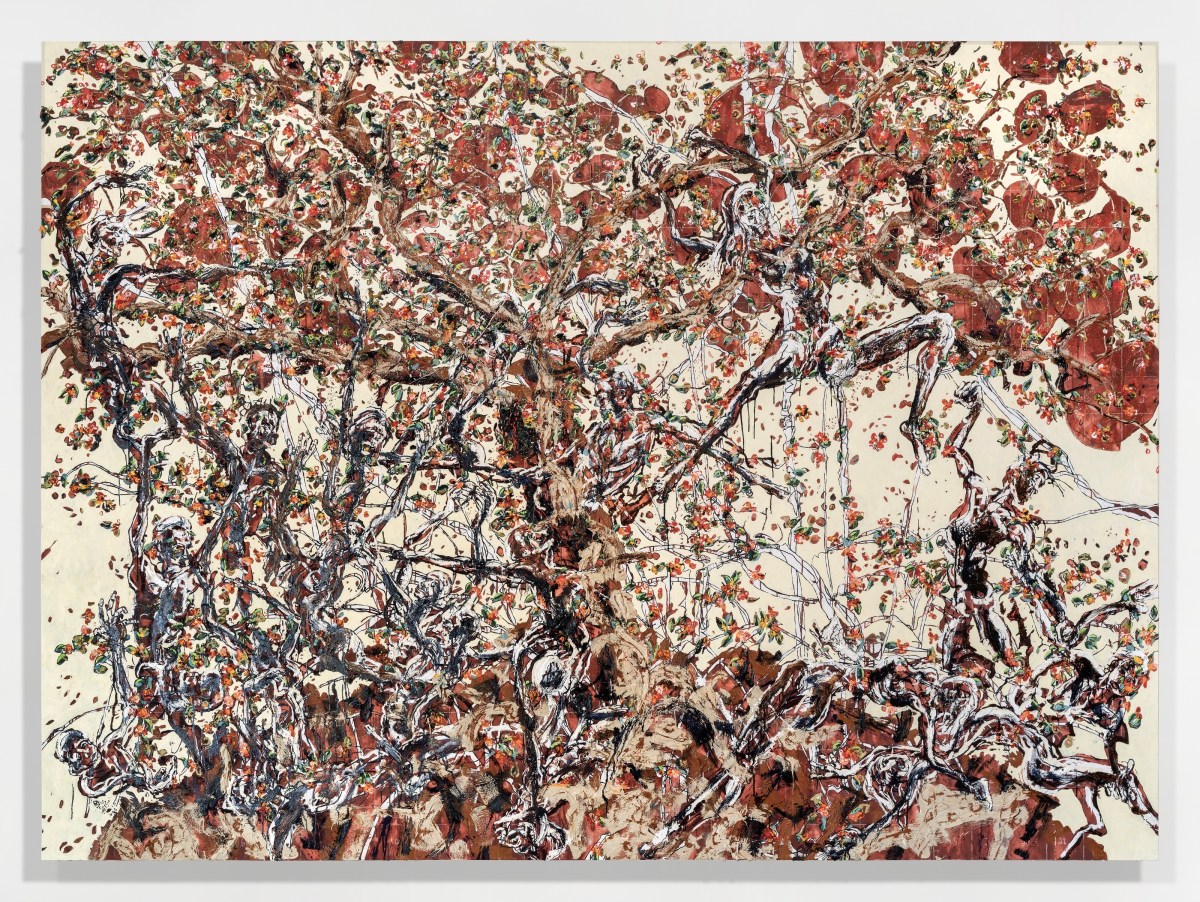
Tequesta Leading the People, 2022
Oil on canvas
86 x 118 inches / 220 x 300 centimeters
Courtesy of the Artist
ABSTRACT
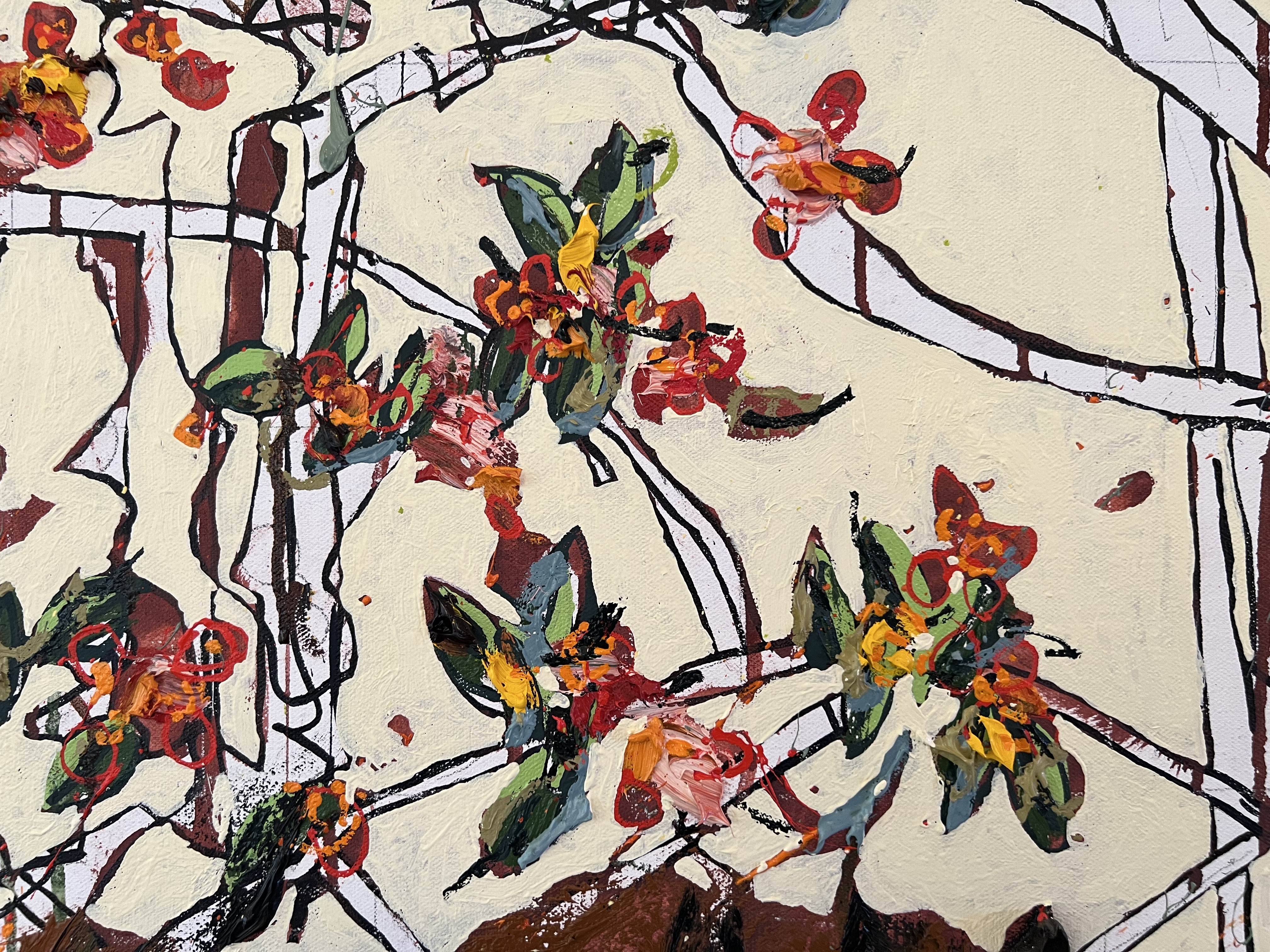
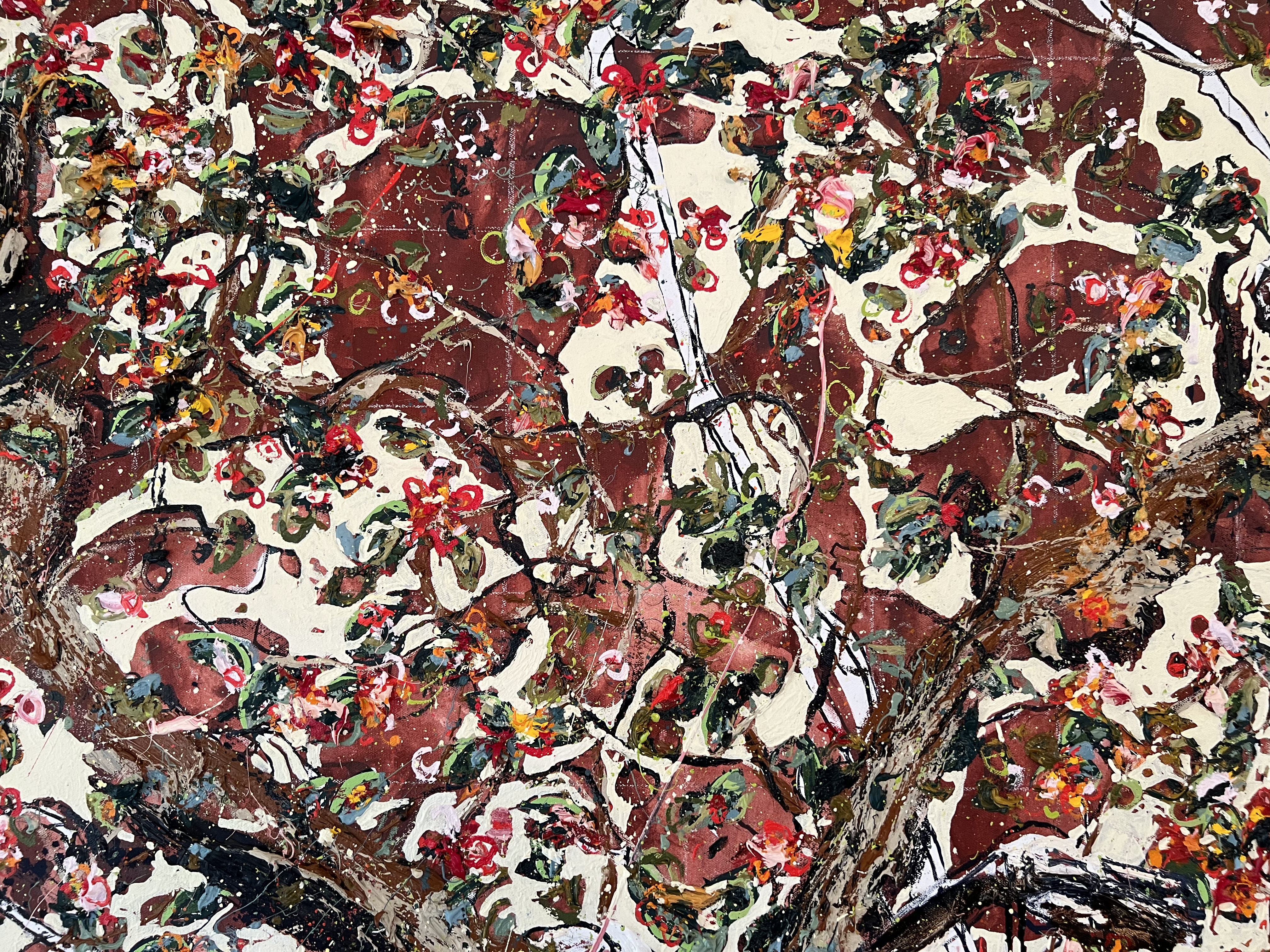
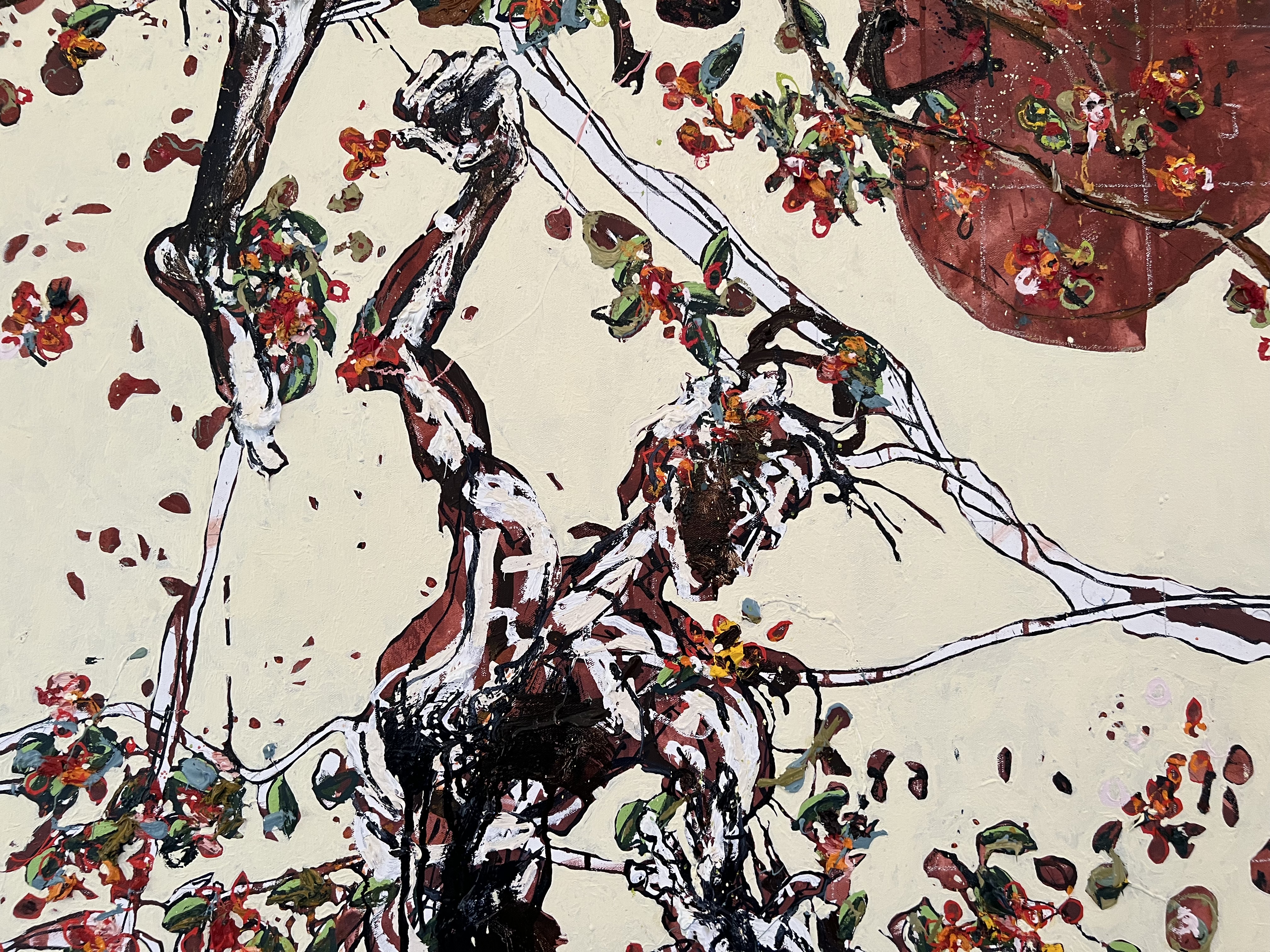
The painting “Tequesta Leading the People” acknowledges the Tequesta as the geographic ancestors of all Miamians and represents Bailly’s recognition of the people that were the guardians of Miami for two millenia. The painting depicts the Tequesta over the Cutler Burial Mound in a composition inspired by Delacroix.
DESCRIPTION
The Tequesta inhabited the geographic area now known as Miami from 500 BCE to 1763. The main city of the Tequesta territory was at the mouth of the Miami River, but they had satellite villages from present day Palm Beach to the northern Florida Keys. One of these villages was at the Deering Estate. The two most important Tequesta archeological sites at the Deering Estate are the Cutler Burial Mound and the Tequesta Midden.
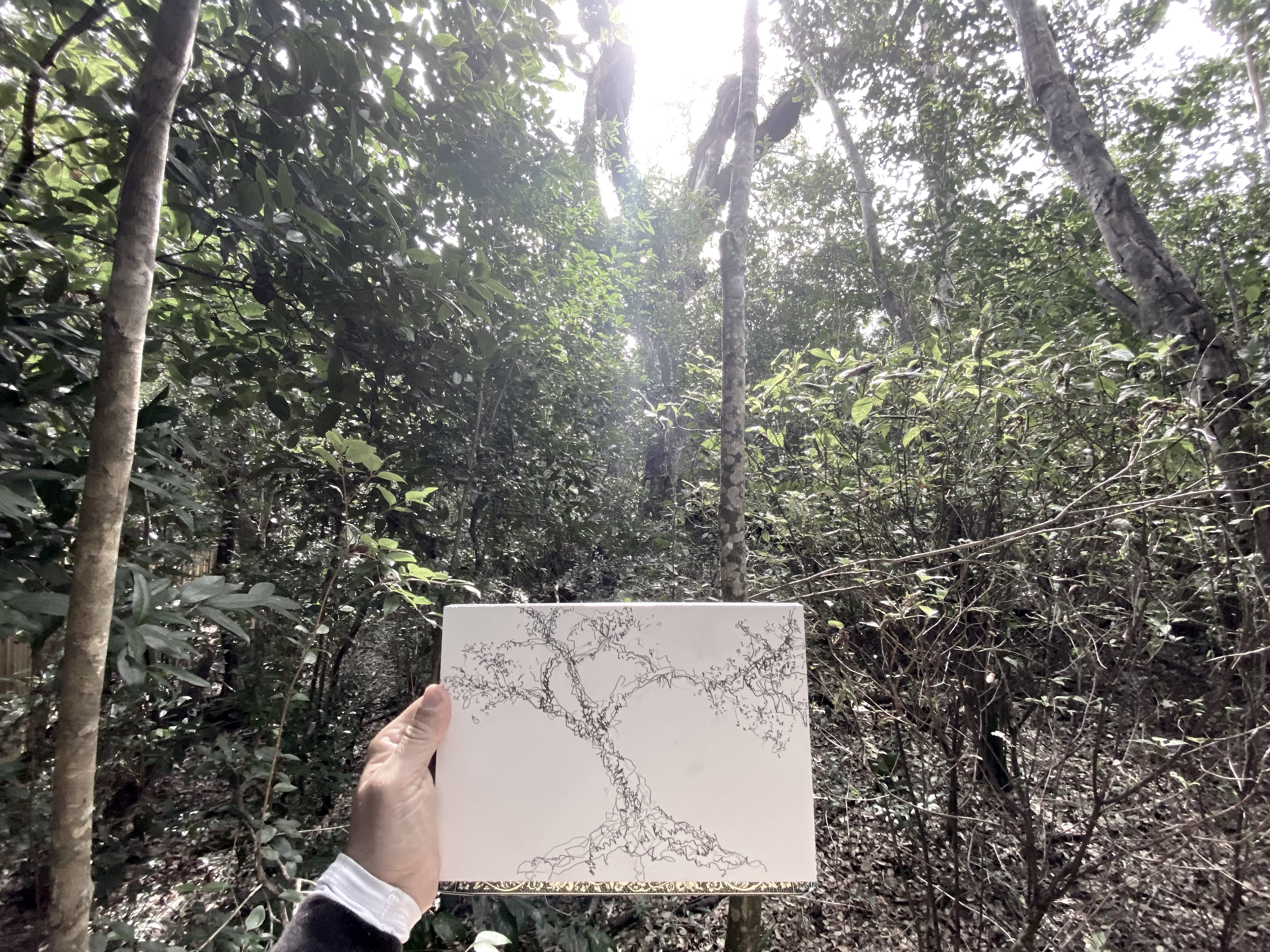
During my time as AIR at the Deering Estate I was provided with access to the archeological records of the Cutler Burial Mound, one of only three remaining mounds with human remains still interred. I was also granted permission to hike out alone through the Tropical Hardwood Hammock to the secluded site. Sitting alone in the tropical forest at the grave of an extinct people was a profoundly moving experience. Atop the mound an oak tree estimated to be between 400 to 600 years old rests in a solemn manner. As I made drawings of the site while on location, I felt a desire to culturally recognize these geographic ancestors.
Paris. 2020. COVID. Empty Paris. As a dual French and American citizen, I was able to board a flight with eight passengers from New York to the French capital in 2020. The most visited city in the world was a ghost town. I arrived right at the time the Louvre reopened. But due to travel restrictions, the museum remained empty. I was able to see paintings as just paintings without the tornado of tourists with outstretched phones. Again, I pulled out my drawing pad. I sat alone in front of Delacroix’s Liberty Leading the People and realized just how absolutely radical the painting is. For me, making an interpretive drawing of a work while in front of the work is the most direct manner of truly seeing a painting. Marianne, symbol of my France’s revolutionary spirit, crossed the barricade to transform the world. Delacroix’s painting depicts people asserting themselves and demanding recognition.
In my Power House Studio at the Deering Estate, I laid out the hundreds of in-situ drawings I had made in the last year. I moved them around like puzzle pieces. My drawing of the Tequesta Burial Mound fell next to my study of Delacroix. Miami, my home for 45 years, and France, my ancestral home came together in an organic and, to me, logical manner. I would make a painting that recreated Delacroix’s composition but replacing the French with Tequesta. And the streets of Paris would be done away with to make way for the Tequesta Burial Mound with its ancient oak tree and tropical forest.
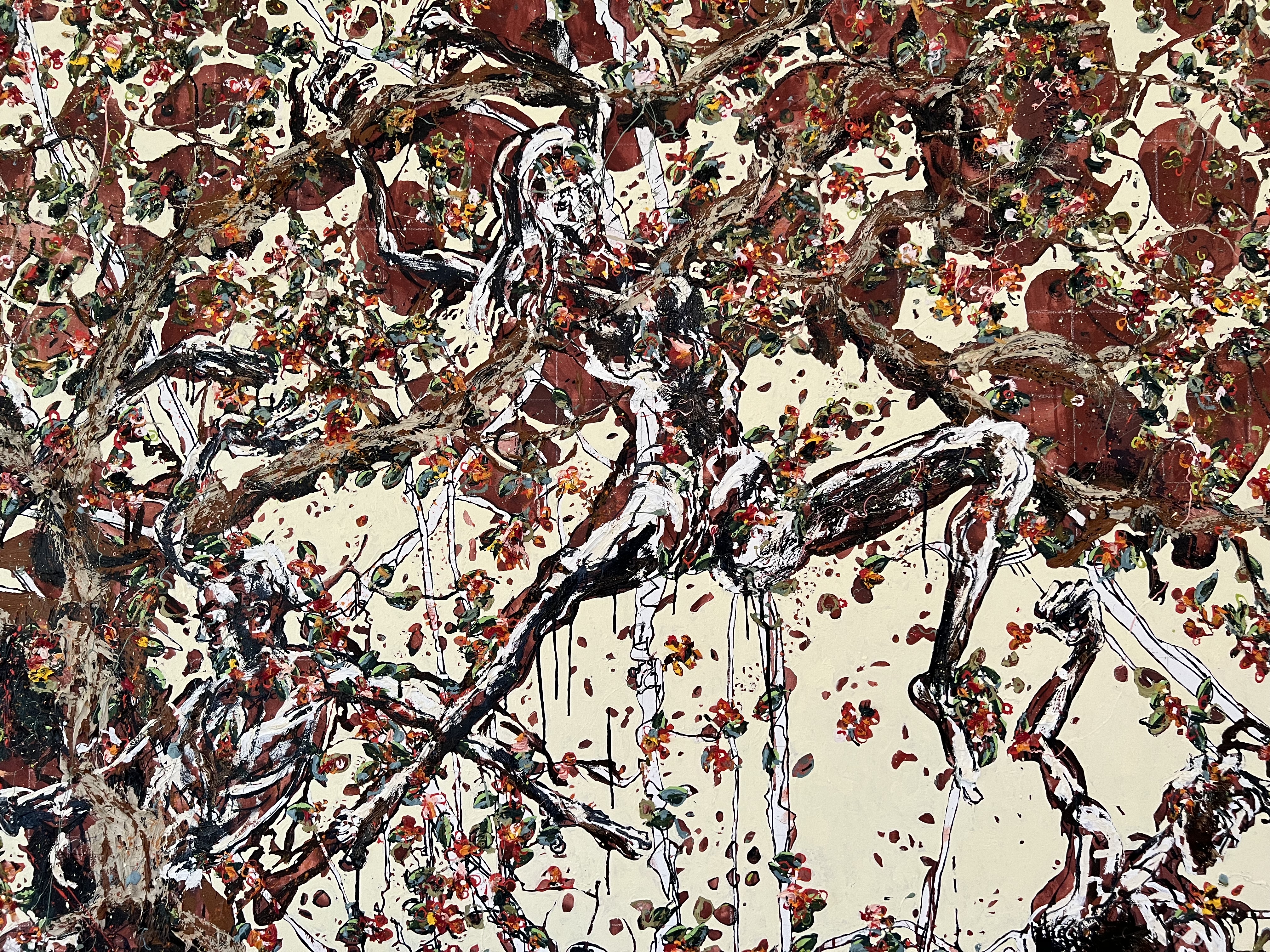
The figures in my painting mirror the placement of the figures in Delacroix’s painting. They are in essentially the same poses in the same location. The burial mound serves as the ground in the manner the barricade does in the 19th century painting. The French flag is replaced with the iconic oak tree, emblematic of the Tequesta Burial Mound.
Tequesta Leading the People is my attempt to recognize the ancestors of the land I have inhabited since the age of ten and to link this past to my ancestral home of France. The iconography and narrative of seemingly unrelated stories merge into one that reflects the global migration trends of the contemporary world.
During his time as Artist-in-Residence Fellow at the Deering Estate, Bailly regularly hiked out to the Tequesta Burial Mound to draw it, as part of his In Situ drawing project. The setting of “Tequesta Leading the People” is this site.
“Cutler Burial Mound – This resource is a small conical mound situated in a hardwood hammock in the Estate…Excavations by Henry Perrine, Jr. in the 1880’s revealed human remains of both adults and children. Perrine offered the following description, one of the few accounts of pre-historic mortuary practices of South Florida’s Native Americans that archaeologists possess, which states that ‘… the skulls in nearly every instance showed that they had been buried with their face downwards, and with the tops toward the center of the mound. It seems as though the heads only have been placed in position for they were near the outer rim of the mound and none of the larger bones of the limbs beyond…'” Miami-Dade County Parks, Recreation and Open Spaces Department
“Tequesta Leading the People” depicts the Tequesta as mythological figures asserting themselves in a celebration of autonomy. As a French-American, Bailly consistently combines the nature and culture of Miami and France into a Transatlantic narrative. As artistic inspiration of the assertion of autonomy, Bailly drew on his In Situ drawing of Delacroix’s “Liberty Leading the People” in the Musée du Louvre. For this work, the setting of the Tequesta Burial Mound is combined with the composition of Delacroix’s painting. The flag is replaced with the oak tree that grows over the burial mound.

Open this page to see the compositional and figurative inspiration Delacroix had on Bailly.

LAST UPDATE
18 September 2022
COPYRIGHT © ALL RIGHTS RESERVED
 John William Bailly